
The cheapest water to deal with is water you move while it is still clean and still moving. Once it has pooled at the bottom of a panel and picked up fines, it becomes sludge — and sludge has to be handled twice.
Face-level water control is therefore the first and most valuable control in the sequence. It is also the one most often left to improvisation: a hand-built sandbag weir, a length of pipe and whatever the crew can find on the day.
Where the water actually comes from
Understanding the source determines the control. Most panels see three streams at once, and each behaves differently.
- Service water — from drilling, watering down and washing. Predictable, continuous during shift, and carries the most fines.
- Fissure water — geological inflow. Unpredictable in volume, often continuous through non-working shifts.
- Return water — from backfill operations and up-dip workings draining down to your panel.
Why conventional methods fall short
The traditional answer is a temporary weir built from sandbags, timber or shotcrete, holding water back until it can be pumped or channelled away.
Built weirs work — briefly. They silt up from behind, they are destroyed by the next blast, and they have to be rebuilt by hand every time the face advances. That rebuild is unplanned labour, performed in a wet, confined position, and it consumes shift time that was budgeted for production. Worse, a partially collapsed weir gives crews false confidence: they believe the panel is protected when the water is already tracking around it.
- Rebuilt after almost every blast
- Silts up and loses capacity within days
- Manual construction in a wet, awkward working position
- No consistency between crews or sections
What good practice looks like
A sound face-water strategy has four elements: intercept the water as high up the panel as possible, keep the flow moving rather than storing it, prevent fines from entering the flow where you can, and make the whole arrangement re-usable so it survives the next advance.
Practically, that means a permanent-standard interception point rather than a rebuilt barrier, a defined channel or pipe route to the nearest sump, and a hard, non-slip surface where people have to work in the wet.
- Intercept high in the panel, not at the bottom
- Move water continuously — do not store it where fines can settle
- Fix the route to the sump; do not improvise it each cycle
- Protect the footing wherever water crosses a walkway
How Eziload solves it
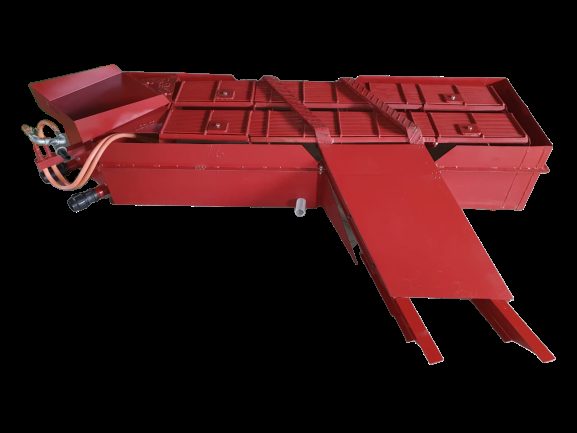
The Water Weir Eliminator replaces the built-and-rebuilt weir with an engineered unit that intercepts and channels water without a construction step. It is installed once, survives the advance cycle and does not need a crew to rebuild it after every blast — which removes both the labour and the wet working position that came with it.
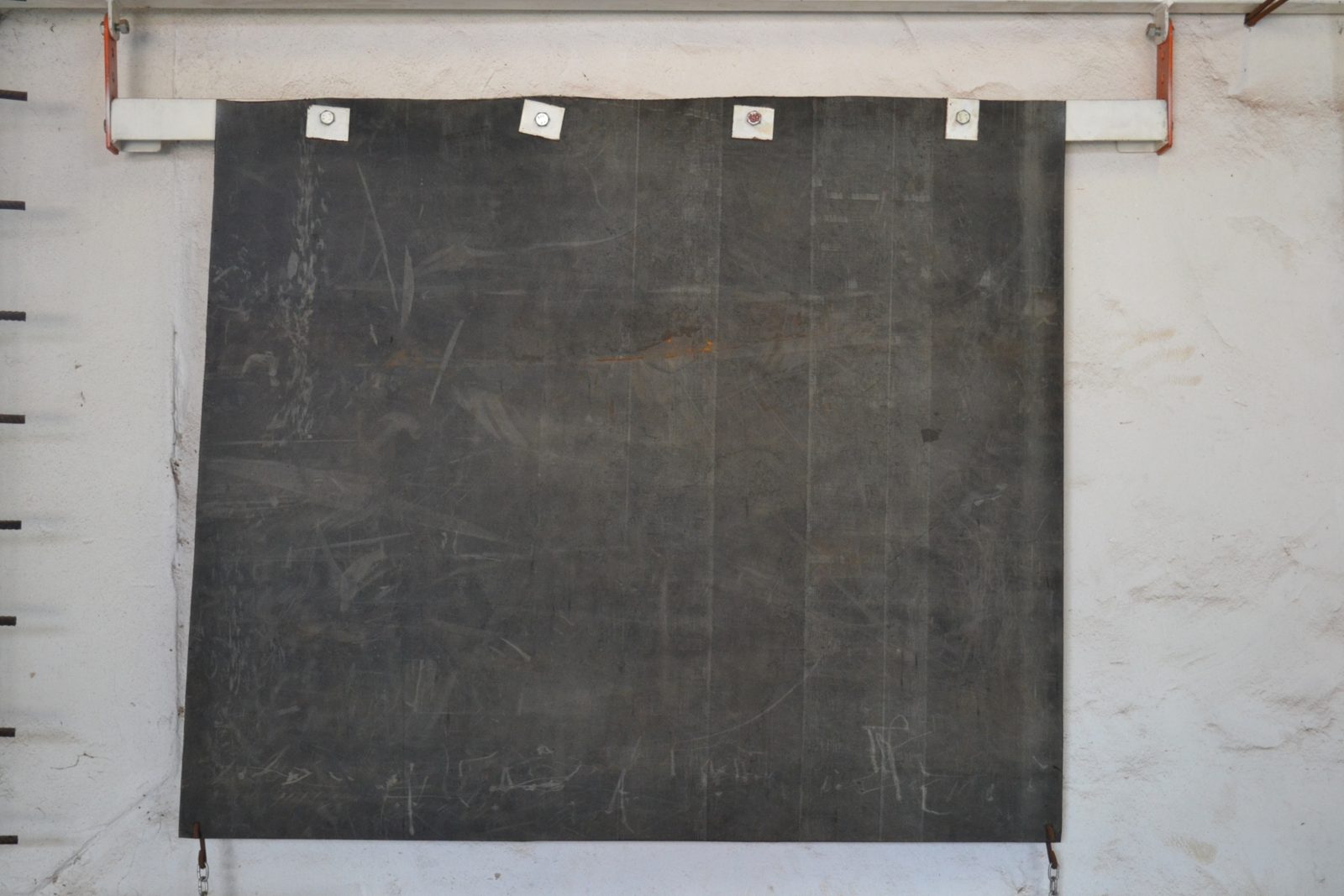
Where water crosses a walkway or working platform, Spillage Mats hold the footing and contain spillage so the wet area does not become a slip incident.
Matching the control to the inflow you actually have
Before specifying anything, measure the inflow rather than estimating it. The simplest reliable method underground is a timed container fill at the discharge point: catch the flow in a drum of known volume and time it. A 200 litre drum filling in 40 seconds is 5 litres per second, or 18 cubic metres per hour — enough to fill a 40 cubic metre sump in just over two hours.
Take the reading twice: once mid-shift with service water running, and once early on a non-working shift when only fissure water is present. The first number sizes the channel and the sump; the second tells you what the pump has to keep up with when nobody is underground to notice a problem.
Then work backwards. The interception point must handle the peak figure, the channel or pipe route must carry it without ponding, and the sump and pump downstream must clear it faster than it arrives over a 24-hour view. If any one of those three is undersized, the other two do not matter — water finds the weakest link and pools there.
- Measure peak inflow during drilling and washing, not the shift average
- Take a second reading on a non-working shift to capture fissure inflow
- Size the interception point for peak, the sump for 24-hour accumulation
- Confirm pump delivery exceeds daily inflow with margin for wear
- Re-measure after any significant advance or new intersection
What to check on your section this week
Most panels do not need a study to improve. A walk-through with this list will usually identify two or three changes that can be made on the next shift.
- Is water intercepted high in the panel, or does it run the full length first?
- How many times has the weir in this panel been rebuilt in the last month?
- Is there a defined route from the interception point to the sump?
- Is anyone working a full shift standing in water? If so, that is the priority.
- Are fines entering the flow at a point you could intercept above?
- Does the walkway crossing the wet area have a defined non-slip surface?
Common installation mistakes
The same handful of errors turn a sound control into a partial one. All of them are cheap to avoid at installation and expensive to correct later.
- Installing too low in the panel — the water has already picked up fines by the time it arrives
- Discharging into an undersized channel, so the control simply moves the ponding ten metres
- No fall on the discharge route, allowing fines to settle in the channel and block it
- Leaving the route to the sump undefined, so each crew improvises differently
- Signing off the installation without confirming the pump can clear the delivered volume
Equipment covered in this guide
Common questions
- How much production time does poor face-water control actually cost?
- Most sections lose the time twice: once when the crew rebuilds a weir instead of advancing, and again when accumulated sludge has to be hand-loaded. A single unplanned cleaning shift in a panel typically costs more than the equipment that would have prevented it.
- Can a weir eliminator handle high fissure inflow?
- It is designed to intercept and channel continuous flow rather than to store it, so sustained inflow is handled better than by a barrier-type weir, which fills and then overtops. Volume should still be matched to the downstream pumping capacity.
- Does it need to be reinstalled after blasting?
- No. That is the point of the design — the unit is recovered and repositioned as the face advances rather than reconstructed from raw materials.
- How do I measure inflow in a working panel without instruments?
- Use a timed container fill. Catch the discharge in a drum of known volume, time how long it takes to fill, and convert to litres per second. Repeat three times and take the highest reading as your design figure.
- Should water be intercepted at the top or the bottom of the panel?
- As high as practical. Water intercepted before it runs the length of the panel carries far fewer fines, which means less sludge downstream, longer sump cleaning intervals and less pump wear.
- Is a sandbag weir ever the right answer?
- As a same-shift emergency measure, yes. As a standing arrangement in a panel that advances on a regular cycle, no — the rebuild labour repeats indefinitely and the working position is wet and awkward every time.
Dealing with this on your mine?
Tell us what the section looks like and where the water is collecting. We will come back with a practical recommendation and an indication of cost.
Request a recommendation