
A sump is a settling vessel whether you designed it that way or not. Water slows down, fines drop out, and capacity disappears from the bottom up.
Every mine knows this. Very few have a plan for it beyond sending people in with shovels when the pump starts cavitating.
The silting cycle
A newly cleaned sump performs to specification. Within weeks, settled fines reduce the effective volume, so the pump cycles more often. Shorter cycles mean the pump draws closer to the settled layer, so it starts passing abrasive solids. That wears impellers and seals, which raises maintenance cost and lowers delivery, which in turn means water backs up into the workings.
By the time the problem is visible as standing water, the sump has usually lost most of its capacity and the pump has already taken damage.
What manual cleaning really costs
Manual sump cleaning is one of the least desirable jobs underground: confined, wet, and performed in a position where mechanical help cannot reach. It is also expensive in ways that are rarely captured on one cost code.
- Crew hours diverted from production, usually at short notice
- Pump station downtime while the sump is out of service
- Elevated ergonomic and confined-space risk exposure
- Pump wear already incurred before cleaning was triggered
- Repeat cost — the cycle restarts the day the sump is back in service
Designing a sump that keeps working
Good sump practice separates the two jobs a sump is doing: holding water for the pump, and dropping out solids. When both happen in the same volume, the solids win.
The better arrangement gives solids somewhere to go and provides a mechanism to move them out without taking the sump out of service or putting a person in it. Access, inspection and a defined cleaning method should be part of the installation, not an afterthought.
- Separate settlement from pump draw-off
- Size for the real inflow, including non-working shifts
- Build in a solids-removal mechanism at installation
- Never rely on a method that requires entry to restore capacity
How Eziload solves it
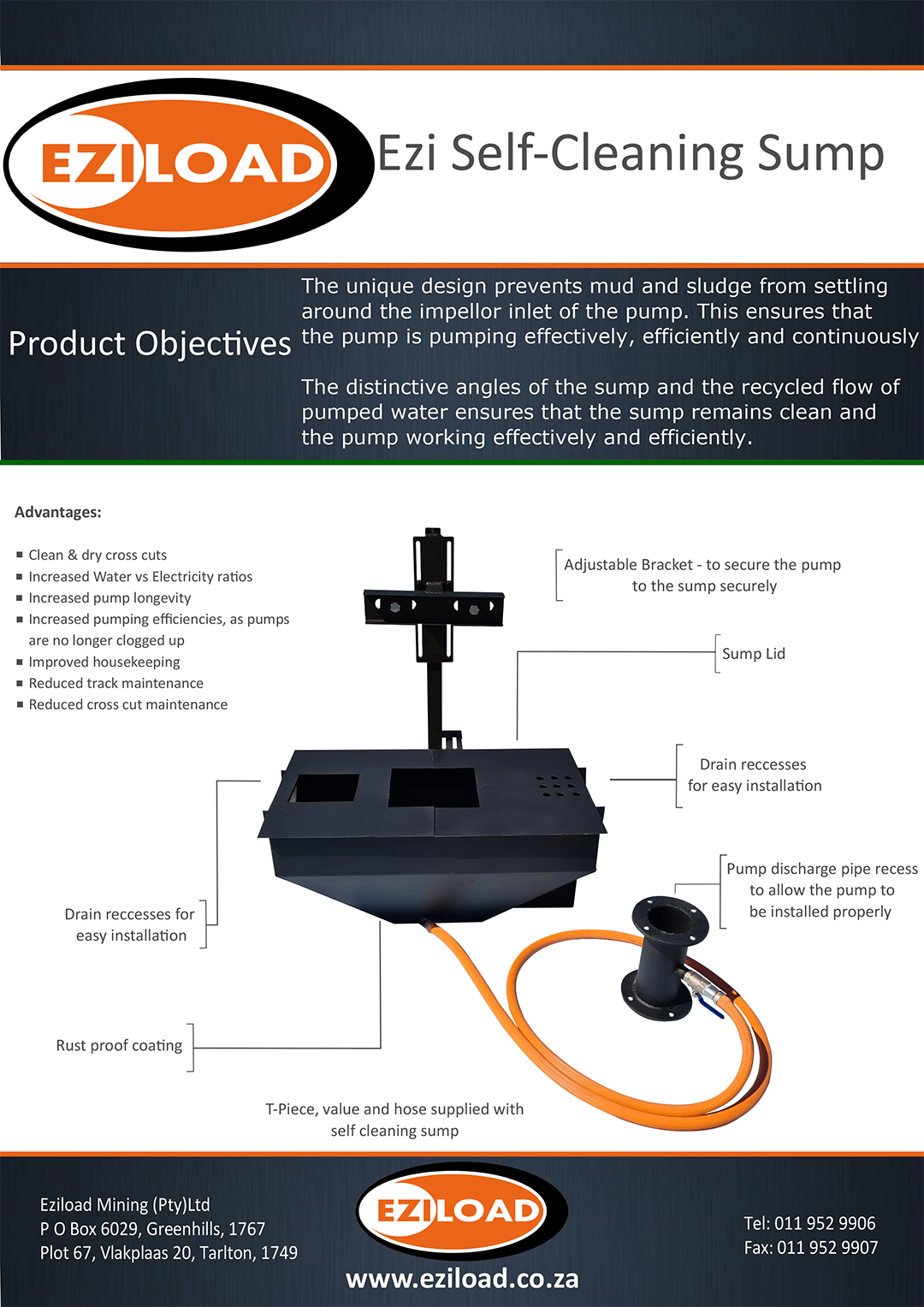
The Ezi Self-Cleaning Sump keeps its own capacity available by moving settled material out as part of normal operation, so the pump keeps drawing clean water and capacity does not decay between cleaning shifts.
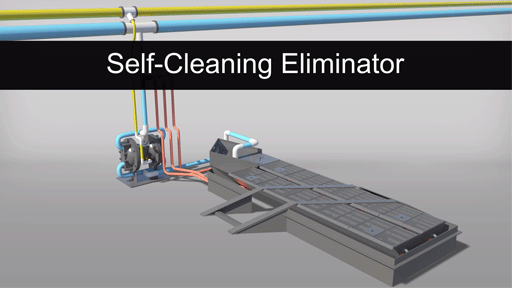
The Self-Cleaning Eliminator applies the same principle where water and fines are being handled ahead of the sump, so less material reaches settlement in the first place.
Sizing a sump properly
A sump has to hold enough water to buffer the pump against inflow variation, and enough spare volume to absorb settled solids between cleans. Most underground sumps are sized for the first job only, which is why they lose their working margin so quickly.
A workable rule of thumb: size the working volume for at least four hours of peak inflow, then add a settlement allowance on top. At 5 litres per second peak inflow, four hours is roughly 72 cubic metres of working volume before any allowance for solids. If the section runs a 40 cubic metre sump on that duty, the pump is effectively the only thing standing between the section and standing water — a pump trip on a Friday afternoon floods the workings before Monday.
Then decide, in writing, how capacity is recovered. If the answer is people with shovels, the design is not finished.
- Working volume: four hours or more of peak inflow
- Settlement allowance: additional volume, not borrowed from working volume
- Draw-off point above the settled layer, never in it
- Defined, mechanical capacity-recovery method specified at installation
- Inspection access that does not require entry
A worked example
Take a section that hand-cleans two sumps on a six-week cycle. Each clean occupies four people for a full shift, plus a supervisor, and the pump station runs at reduced capacity for that shift. Over twelve months that is roughly 17 cleaning shifts, around 70 crew-shifts of unplanned labour, and 17 shifts of reduced pumping capacity.
Add the maintenance side. A pump passing abrasive solids for the last two weeks of every cycle will typically need impeller and seal attention several times more often than one drawing clean water. Whatever your mine's actual rebuild cost is, multiply it by the additional rebuilds and add it to the labour figure.
The point of the exercise is not the precise number. It is that the recurring annual cost is almost always larger than the once-off cost of a sump that keeps its own capacity available — and it repeats every year that nothing changes.
What to check on your section this week
These six questions will tell you whether your sumps are working as designed or quietly degrading.
- When was each sump last cleaned, and how many crew-shifts did it take?
- How much of the design volume is currently available? Probe it, do not assume.
- Is the pump cycling more often than it did after the last clean?
- Have impeller or seal replacements increased over the past six months?
- Does recovering capacity require a person to enter the sump?
- Is there anything upstream reducing the fines load, or is everything reaching the sump?
Equipment covered in this guide
Common questions
- How often does a conventional mine sump need cleaning?
- It depends entirely on the fines load, but sections handling heavy service water commonly find capacity meaningfully reduced within weeks, with a full manual clean required well before the planned interval.
- Does a self-cleaning sump remove manual cleaning completely?
- It removes the routine capacity-recovery clean, which is the frequent and costly one. Periodic inspection remains part of good practice.
- What is the payback on a self-cleaning system?
- The three recoverable costs are cleaning labour, pump wear and lost pumping capacity. On sections that currently clean sumps by hand on a regular cycle, those three together usually justify the change on their own.
- How big should an underground sump be?
- Size the working volume for at least four hours of peak inflow, then add a separate settlement allowance on top. Sizing for average inflow, or borrowing settlement volume from working volume, is what produces sumps that run out of capacity within weeks.
- Why does the pump wear out faster as the sump silts up?
- As settled solids reduce the volume, the pump cycles more often and draws closer to the settled layer, so it starts passing abrasive material. That attacks impellers and seals, which lowers delivery and makes the water problem worse.
- Can an existing sump be converted rather than replaced?
- Often, yes — the two things that matter are separating settlement from the pump draw-off and adding a solids-removal method that does not require entry. Both can frequently be retrofitted to an existing excavation.
- What is the safest way to recover sump capacity?
- Any method that does not place a person inside the sump. Entry into a confined, wet excavation with unstable footing is the highest-risk part of the whole cleaning task, and it is the part a self-cleaning arrangement removes.
Dealing with this on your mine?
Tell us what the section looks like and where the water is collecting. We will come back with a practical recommendation and an indication of cost.
Request a recommendation