
The moment fines enter the water stream, the problem changes character. Water can be pumped and channelled. Sludge settles wherever it slows down — in cross-cuts, on tracks, in sumps and in pipe runs.
Mud loading is one of the largest hidden labour costs in an underground section, and almost all of it is created upstream by uncontrolled water.
How sludge accumulates
Sludge builds up at every point where flow velocity drops: at a gradient change, at a corner, at an obstruction, at the entry to a sump. It compacts over time and becomes progressively harder to remove.
Because it accumulates gradually, it is usually only addressed when it interferes with something else — a track becomes impassable, a cross-cut floods, a pump loses suction. At that point removal is urgent, manual and unbudgeted.
Why hand-loading is the wrong default
Hand-loading mud is slow, physically punishing and performed in exactly the conditions that generate injuries: wet footing, awkward posture, confined space, and often under time pressure because something else is waiting on it.
It also treats the symptom. The mud will return on the same cycle unless the water regime that created it changes.
- High labour hours per cubic metre removed
- Ergonomic injury exposure
- Occurs under production pressure, so shortcuts are likely
- Recurring — the cause is untouched
Controlling sludge rather than removing it
The practical strategy has three steps: keep fines out of the water where possible, keep whatever fines are in the stream moving so they cannot compact, and give the material a defined place to accumulate where it can be removed mechanically.
An accumulation point that you chose is manageable. One that the mine chose for you — a cross-cut or a track bed — is not.
- Intercept fines close to the source
- Maintain velocity through the reticulation route
- Provide a single designed accumulation point
- Remove mechanically, never by default with shovels
How Eziload solves it
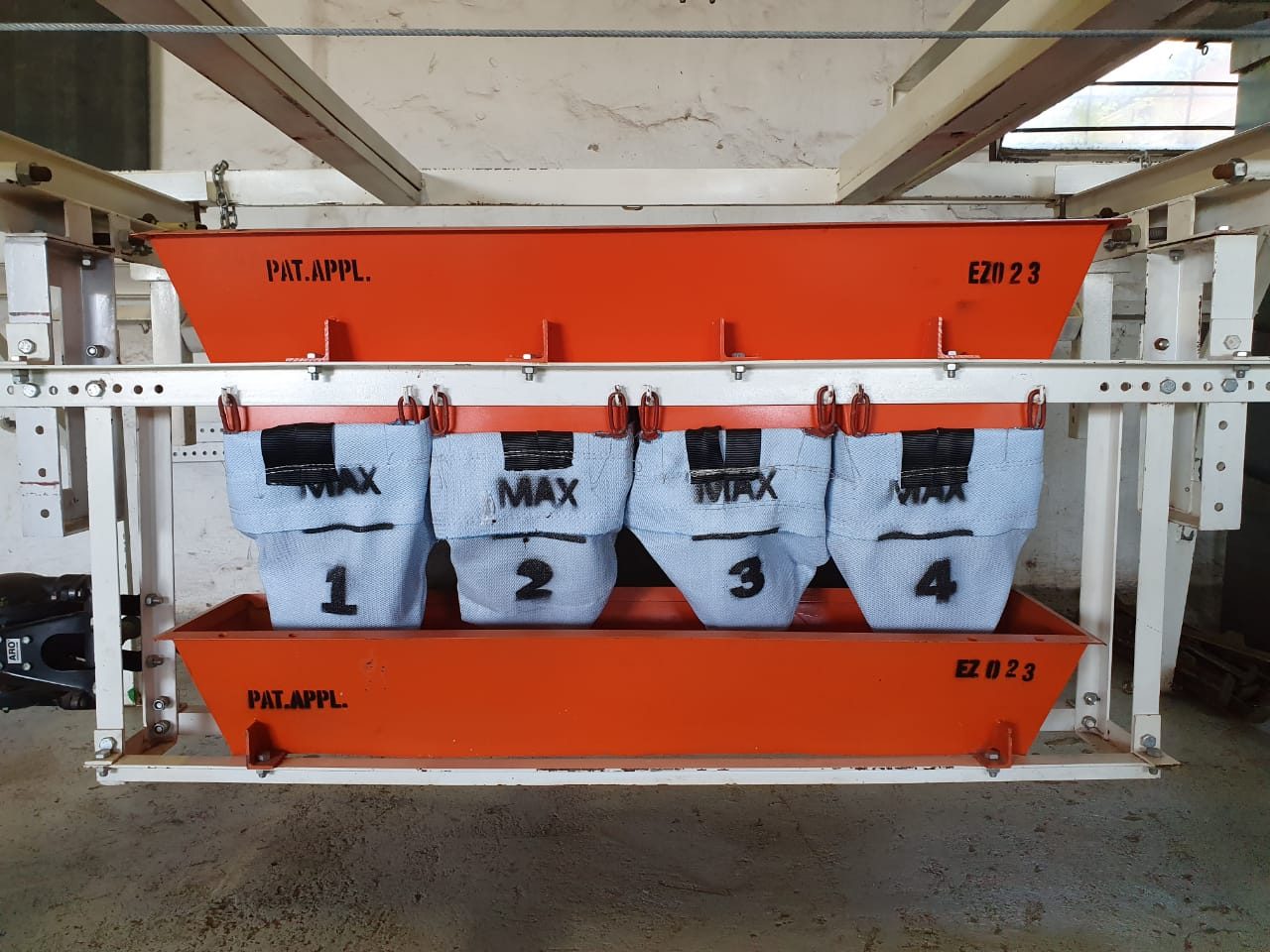
The Mud Accumulator gives sludge a designed collection point that can be cleared without hand-loading a cross-cut. It concentrates the problem in one controlled place instead of spreading it along the whole route.
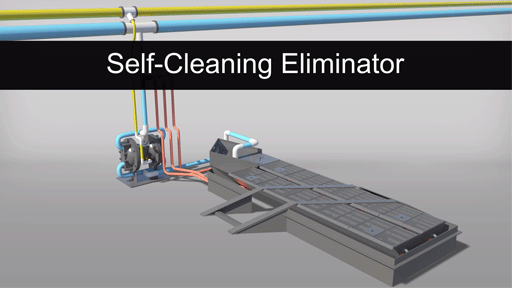
Upstream, the Self-Cleaning Eliminator reduces the volume of material that reaches the accumulation point at all, so clearing intervals lengthen.
How much material are you actually moving?
Sludge volumes surprise people. A cross-cut 20 metres long and 3 metres wide, silted to a depth of 150 millimetres, holds about 9 cubic metres of wet mud. Hand-loading that is not a task measured in hours — it is a crew, a full shift, and usually a second one to finish the corners and reinstate the drain.
Do the same sum for each location that silts up on your section, add the frequency, and you have the annual hand-loading burden in cubic metres. That figure is the one to take to a planning meeting, because it converts an accepted nuisance into a quantity.
- Measure length, width and settled depth at each recurring silt point
- Multiply out to cubic metres and record the clearing frequency
- Convert to crew-shifts per year using your own loading rates
- Note which locations block production when they silt up — those come first
Where to put the designed accumulation point
The right position is upstream of everything you do not want silted: ahead of the cross-cut, ahead of the track bed, ahead of the sump. It should be somewhere with mechanical access, because the whole purpose is to make removal a machine task rather than a manual one.
It should also be somewhere a person can inspect safely without entering, so that clearing is planned on condition rather than triggered by a blockage.
- Upstream of the first location that currently silts up
- Reachable by the machine that will clear it
- Visible for routine inspection without entry
- On a route that keeps velocity up between the source and the accumulator
- Clear of travelling ways so clearing does not stop movement
Common mistakes
Sludge handling goes wrong in predictable ways, and most of them come from treating it as a cleaning problem rather than a flow problem.
- Clearing on failure instead of on a planned condition-based interval
- Placing the accumulation point downstream of the assets you are protecting
- Allowing gradient changes and sharp corners that drop velocity in the reticulation route
- Reinstating a silted drain without changing what caused the silting
- Accepting hand-loading as the default because it has always been done that way
Equipment covered in this guide
Common questions
- Why does mud keep returning to the same cross-cuts?
- Because the cross-cut is where flow slows down. Unless the upstream water regime changes or a designed accumulation point is provided ahead of it, the same location will silt up on the same cycle.
- Is a mud accumulator suitable for high-fines service water?
- Yes — heavy fines loading is exactly the case it addresses, by concentrating settlement in one serviceable location rather than along the reticulation route.
- How much mud is in a silted cross-cut?
- More than it looks. A 20 metre cross-cut, 3 metres wide, silted 150 millimetres deep holds roughly 9 cubic metres of wet material — typically a full crew-shift or more to hand-load and reinstate.
- What causes sludge to build up in one place and not another?
- Velocity. Material drops out wherever the flow slows — at gradient changes, corners, obstructions and sump entries. Fixing the build-up means restoring velocity or choosing a designed place for the material to settle.
- Is it better to stop fines entering the water or to remove them later?
- Stopping them is always cheaper. Every cubic metre of fines kept out of the stream is a cubic metre nobody has to move again from a cross-cut, a drain or a sump.
- How often should a designed accumulation point be cleared?
- On condition, not on the calendar. Inspect it on a routine walk-through and clear it before it reaches capacity — that keeps the job planned, mechanical and short.
Dealing with this on your mine?
Tell us what the section looks like and where the water is collecting. We will come back with a practical recommendation and an indication of cost.
Request a recommendation